Foundation Issues Are More Common Than You Think
The foundation is the most important structural element of any home. When it fails, everything above it is affected: walls crack, floors slope, doors stick, and water finds its way in. In northeast Indiana, the combination of clay-heavy soils, seasonal freeze-thaw cycles, and aging housing stock makes foundation problems a regular finding during home inspections.
At AP Inspections, we evaluate foundations on every inspection we perform across Steuben, Noble, DeKalb, and LaGrange counties. Some of what we find is cosmetic and harmless. Some of it requires immediate attention. Knowing the difference can save you thousands of dollars and a lot of stress, whether you are buying a home or maintaining the one you already own.
Why Indiana Is Tough on Foundations
Before we get into the warning signs, it helps to understand why foundations in this part of the state are particularly vulnerable.
Clay Soils
Much of northeast Indiana sits on clay-rich soil. Clay expands when it absorbs water and contracts when it dries out. This constant cycle of swelling and shrinking puts lateral pressure on foundation walls and can cause them to bow inward, crack, or shift over time. Homes built on poorly compacted fill soil are especially susceptible.
Freeze-Thaw Cycles
Indiana winters are hard on foundations. When water in the soil around your foundation freezes, it expands and pushes against the walls. When it thaws, it contracts and leaves gaps. This repeated freeze-thaw action, sometimes happening dozens of times per winter, gradually weakens concrete and masonry foundations.
Aging Housing Stock
Many homes in Kendallville, Garrett, Auburn, and throughout the region were built in the early to mid-1900s. Older foundations were often constructed with materials and methods that do not hold up as well over time, including rubble stone, unreinforced concrete block, and poured concrete without modern waterproofing. These homes are not inherently bad investments, but they do require closer attention to the foundation.
Warning Signs to Watch For
Cracks in Foundation Walls
Not all cracks are created equal. Here is how to assess what you are seeing.
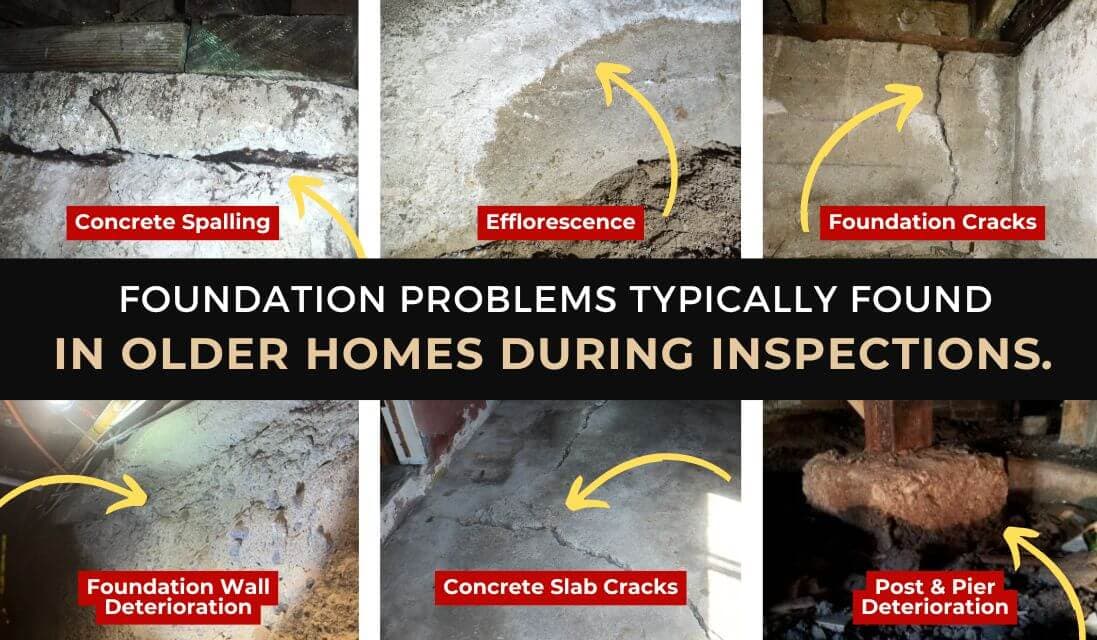
Hairline vertical cracks are common in poured concrete foundations and are usually caused by normal curing and shrinkage. These are typically cosmetic and not a structural concern, though they can allow minor water seepage.
Stair-step cracks in concrete block or brick foundations follow the mortar joints in a stair-step pattern. These indicate differential settlement, meaning one part of the foundation is sinking faster than another. Stair-step cracks wider than 1/4 inch or showing displacement warrant professional evaluation.
Horizontal cracks are the most serious type. A horizontal crack in a basement wall, especially in a concrete block foundation, indicates that the wall is bowing inward under lateral soil pressure. This is a structural problem that typically requires reinforcement or repair.
Diagonal cracks radiating from corners of windows or doors often indicate settlement. If they are growing or wider than 1/4 inch, they need attention.
Sticking Doors and Windows
When a foundation shifts, the door and window frames in the home shift with it. If doors that used to close easily now stick or will not latch, or if windows are suddenly difficult to open or close, foundation movement may be the cause. This is especially common in older homes in the region where settlement has been gradual over decades.
Pay attention to whether the sticking is seasonal. Some swelling of wood frames in humid Indiana summers is normal. But if doors and windows stick year-round and the problem is getting worse, the foundation is a likely culprit.
Uneven or Sloping Floors
A floor that slopes noticeably in one direction is a classic sign of foundation settlement. You can test this roughly by setting a marble or ball on the floor and watching which way it rolls.
Minor slopes in older homes are common and may have been present for years without progressing. However, significant slopes, especially in combination with other warning signs, suggest active foundation movement. We see this frequently in inspections of older homes throughout northeast Indiana.
Gaps Between Walls and Ceilings or Floors
When a foundation settles unevenly, the framing above it moves as well. This can create visible gaps where walls meet ceilings, where walls meet floors, or where exterior walls pull away from the rest of the structure. Crown molding that is separating from the ceiling or baseboards pulling away from the wall can be indicators.
Water in the Basement
Water intrusion in a basement can be a symptom of foundation problems, a cause of future foundation problems, or both. Cracks in the foundation allow water to enter. Persistent moisture weakens the foundation further and can erode the soil supporting it.
Signs of water intrusion include:
- Visible water or damp spots on basement walls or floors
- Efflorescence -- white mineral deposits on concrete or masonry surfaces, indicating water has been passing through
- Musty odors suggesting mold or mildew from chronic moisture
- Staining or discoloration on walls, especially in horizontal lines that show past water levels
- A running sump pump that cycles frequently, indicating high groundwater pressure
In northeast Indiana, spring snowmelt and heavy rain events are the most common triggers for basement water problems. Proper grading, gutter maintenance, and exterior drainage are your first lines of defense.
Exterior Warning Signs
Foundation problems are not always visible from inside the home. Look for these exterior indicators as well:
- Cracks in exterior brick or stone veneer, especially stair-step patterns
- Gaps around exterior doors or garage doors
- A chimney that is leaning or separating from the main structure
- Soil pulling away from the foundation (a sign of clay soil shrinkage)
- Bulging or bowing foundation walls visible from the outside
Which Findings Are Serious?
During a home inspection, we classify foundation findings based on severity:
Monitor -- Hairline cracks, minor cosmetic issues, and small amounts of efflorescence. These should be documented and watched for changes over time but do not usually require immediate repair.
Repair recommended -- Cracks wider than 1/4 inch, minor bowing, evidence of past water intrusion that has been addressed, and settlement that appears to have stabilized. These should be repaired but may not be urgent.
Further evaluation needed -- Horizontal cracks, significant bowing, active water intrusion, major settlement, or any combination of multiple warning signs. These require evaluation by a structural engineer who can assess the extent of the problem and recommend specific repairs.
What Repairs Look Like
Foundation repairs in northeast Indiana typically fall into a few categories:
- Crack injection -- Epoxy or polyurethane injection to seal cracks and prevent water entry. Effective for hairline and minor vertical cracks. Cost: $300-$800 per crack.
- Carbon fiber reinforcement -- Strips bonded to the interior of bowing walls to prevent further movement. Cost: $4,000-$8,000 depending on the wall.
- Wall anchors or braces -- Steel anchors installed through the wall into stable soil to stabilize or gradually straighten bowing walls. Cost: $5,000-$15,000.
- Piering or underpinning -- Steel piers driven to stable soil or bedrock to support a settling foundation. This is the most significant repair. Cost: $10,000-$30,000 or more.
- Exterior waterproofing -- Excavation around the foundation to apply waterproof membrane and install drainage tile. Cost: $8,000-$20,000.
The specific repair depends on the type and severity of the problem, the construction of the foundation, and the soil conditions at the property.
Buying a Home With Foundation Concerns
Finding foundation issues during an inspection does not automatically mean you should walk away from a home. Many foundation problems are repairable, and the cost of repair can be factored into your offer price or negotiated as a seller concession.
What matters most is understanding what you are dealing with. At AP Inspections, we document every foundation finding with photographs, measurements, and clear descriptions. When we recommend further evaluation by a structural engineer, we tell you exactly why, so you can make an informed decision.
Our same-day detailed reports give you the information you need to negotiate effectively and avoid surprises after closing.
Protect Your Investment
Whether you are buying an older home in Kendallville, a mid-century ranch in Auburn, or a property anywhere in Steuben, Noble, DeKalb, or LaGrange County, the foundation is the first thing we look at and the last thing you want to overlook.
Call AP Inspections at (260) 668-6848 or book your inspection online. We will give you an honest, thorough assessment so you can buy with confidence.